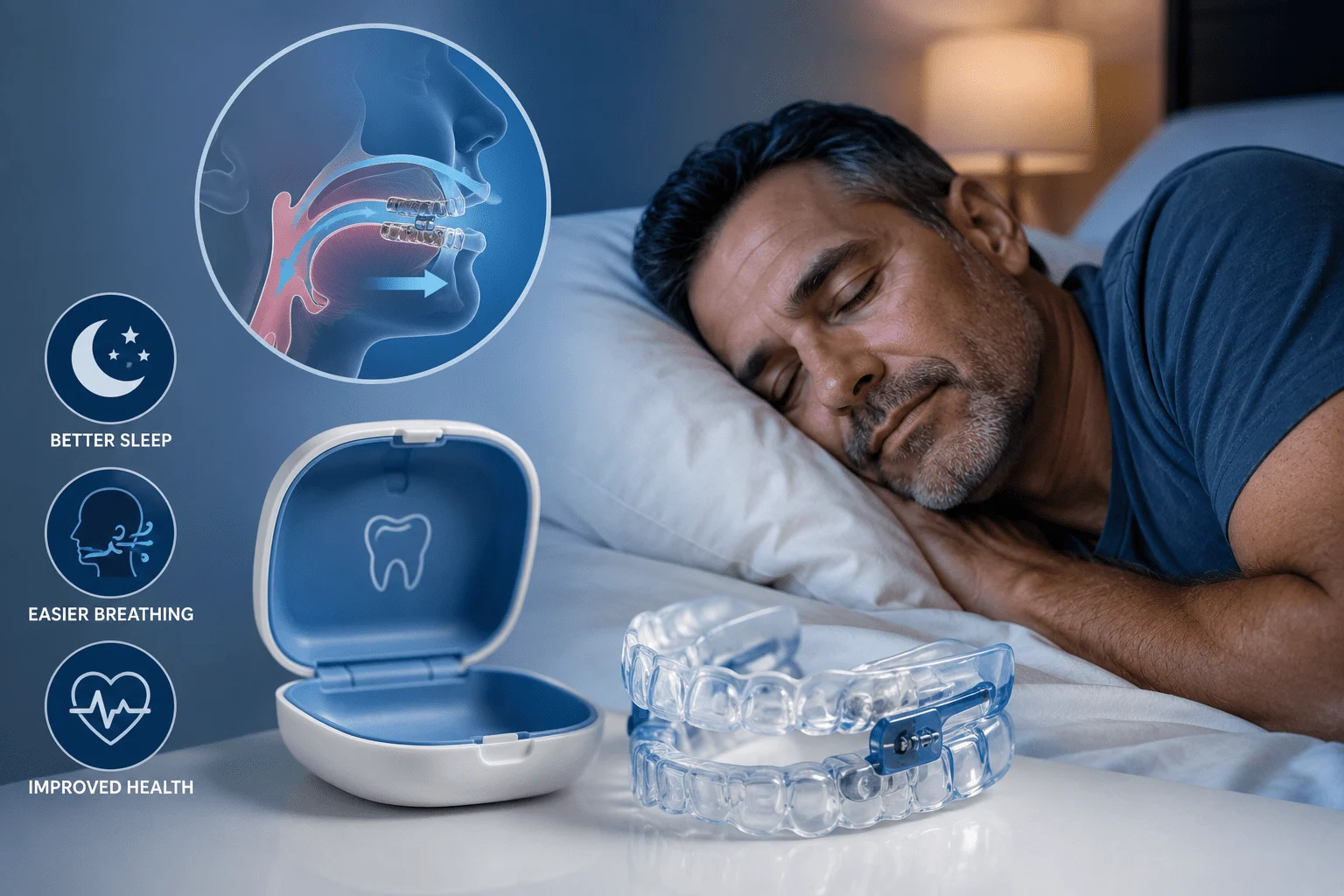
To stop snoring, start with simple changes: sleep on your side, keep a healthy weight, avoid alcohol and sedatives before bed, treat nasal congestion and keep a regular sleep schedule. If snoring continues, a custom oral appliance from a dentist can move your lower jaw slightly forward to keep the airway open. Loud, frequent snoring can also be a sign of obstructive sleep apnea, so it is worth getting screened.
At DreamSmile in Everett, WA, Dr. Amy Norman helps patients and their partners sleep better with custom snoring appliances and sleep apnea screening. Below, we explain why people snore, what lifestyle changes help, and how dental solutions work.
Why Do People Snore?
Snoring happens when air flows past relaxed tissues in the throat, causing them to vibrate. Common causes include:
- Relaxed throat and tongue muscles during deep sleep
- Sleeping on your back, which lets the tongue fall backward
- Excess weight around the neck
- Alcohol or sedatives that relax throat muscles
- Nasal congestion from allergies, colds or a deviated septum
- A recessed jaw or large tongue, which narrows the airway
- Aging, which reduces muscle tone
Men are more likely to snore than women. Learn why Men Snore More Than Women?
Is Snoring a Sign of Sleep Apnea?
Not always, but it can be. Watch for these warning signs of obstructive sleep apnea:
- Loud snoring with pauses, gasping or choking
- Waking up with a dry mouth, sore throat or headache
- Daytime sleepiness or trouble concentrating
- High blood pressure
- A partner noticing that you stop breathing during sleep
Sleep apnea is diagnosed with a sleep study ordered by a physician. Your dentist can help screen for signs and work with your doctor on treatment.
Lifestyle Tips to Stop Snoring
- Sleep on your side. A body pillow or positional device can help you stay off your back.
- Raise the head of your bed a few inches.
- Maintain a healthy weight. Even modest weight loss can reduce snoring.
- Avoid alcohol 3 to 4 hours before bed.
- Treat nasal congestion with saline rinses or allergy care.
- Stay hydrated so mucus in the nose and throat stays thin.
- Keep a consistent sleep schedule; overtiredness can deepen muscle relaxation.
- Quit smoking, which irritates and swells airway tissues.
Dental Solutions for Snoring
| Option | How it works | Best for |
|---|---|---|
| Custom oral appliance (mandibular advancement device) | Holds the lower jaw slightly forward to keep the airway open | Primary snoring and mild to moderate sleep apnea |
| Tongue-retaining device | Holds the tongue forward with gentle suction | People who cannot use jaw-advancing devices |
| Over-the-counter “boil and bite” guard | Generic fit that advances the jaw | Short-term trial; less comfortable and adjustable |
| CPAP (prescribed by a physician) | Air pressure keeps the airway open | Moderate to severe sleep apnea |
Custom oral appliances are made from impressions or scans of your teeth, so they fit precisely and can be adjusted gradually. Read Do Snoring Mouth Guards Work? A Dentist’s Guide (internal link) for a deeper comparison.
Pros and Cons of Dental Snoring Appliances
Pros
- Quiet, portable and easy to travel with
- Comfortable custom fit
- Adjustable for better results
- Often preferred by people who cannot tolerate CPAP
Cons
- May cause temporary jaw soreness or bite changes
- Requires dental follow-up visits
- Not a substitute for CPAP in severe sleep apnea
How DreamSmile Helps You Sleep Quietly
At our Everett office, we:
- Review your sleep habits and symptoms and screen for signs of sleep apnea
- Coordinate with your physician for a sleep study when needed
- Create custom oral appliances designed for comfort
- Monitor your jaw joints and bite, drawing on our experience with TMJ treatment
How to Stop Snoring FAQs
What is the fastest way to stop snoring?
Sleeping on your side and avoiding alcohol before bed often helps right away. Lasting results may need an oral appliance.
Do snoring mouth guards really work?
Custom mandibular advancement devices are effective for many people with primary snoring and mild to moderate sleep apnea.
Can a dentist help with snoring?
Yes. Dentists trained in dental sleep medicine can make custom appliances and help screen for sleep apnea.
Is snoring dangerous?
Simple snoring is mainly a nuisance, but snoring with breathing pauses may indicate sleep apnea, which has health risks.
Does losing weight stop snoring?
It often reduces snoring, especially if weight has been gained around the neck.